

How to Use Zoho CRM for Sales: A Practical Guide for SMEs
For many SMEs (Small-Medium Enterprises), sales challenges rarely come from a lack of effort. More often, they stem from fragmented information, inconsistent follow-ups, and limited visibility into what the sales team is actually doing day to day. Leads are tracked in spreadsheets, conversations live in email inboxes, and management only realises there is a problem when deals fall through.
Zoho CRM is widely adopted by SMEs because it addresses these issues without the cost or complexity of traditional enterprise CRM platforms. When implemented properly, it becomes a single system that guides sales teams on what to do next, ensures nothing is missed, and gives business owners clarity over their sales pipeline.
As a Zoho Authorized Partner, Zolution works closely with SME sales teams to transform Zoho CRM from a basic contact database into a structured, revenue-driving sales platform. This article explains how Zoho CRM should be used for sales, and what SMEs should focus on to see real results.
1. Centralise Leads and Sales Activities in One System
In many SMEs, sales information is scattered across multiple tools—website forms, WhatsApp messages, emails, Excel sheets, and personal notebooks. This fragmentation creates risk. Leads are forgotten, follow-ups are delayed, and when a salesperson leaves, valuable history is lost.
Zoho CRM solves this by acting as a central system of record for all sales activities. Every enquiry, call, email, meeting, and note can be captured against a single lead or customer record. For sales teams, this creates continuity and accountability. For management, it provides transparency.
Once leads are centralised in Zoho CRM, teams spend less time searching for information and more time engaging prospects. This is often the first and fastest win for SMEs adopting a CRM.
2. Build a Structured Sales Pipeline That Reflects Reality
A common misconception is that CRM pipelines should be generic. In reality, every business sells differently. Professional services, B2B solution providers, and education companies all follow distinct sales journeys.
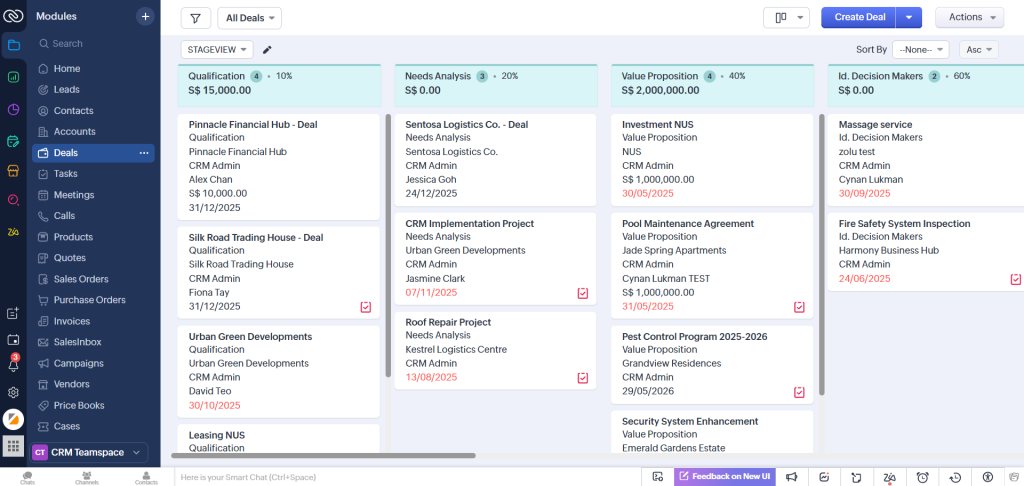
Zoho CRM allows you to design pipelines that reflect how your sales process actually works—from initial enquiry to deal closure. Each stage represents a clear milestone, making it easier to understand where deals stand and what actions are required next.
With a well-defined pipeline, sales leaders can forecast revenue with greater confidence, identify stalled opportunities early, and ensure the team follows a consistent process. Over time, this structure improves both close rates and sales discipline.
3. Reduce Manual Work Through Sales Automation
Sales teams are often busy, but not always productive. A large portion of their time is spent on administrative work—setting reminders, updating records, and sending routine follow-up emails.
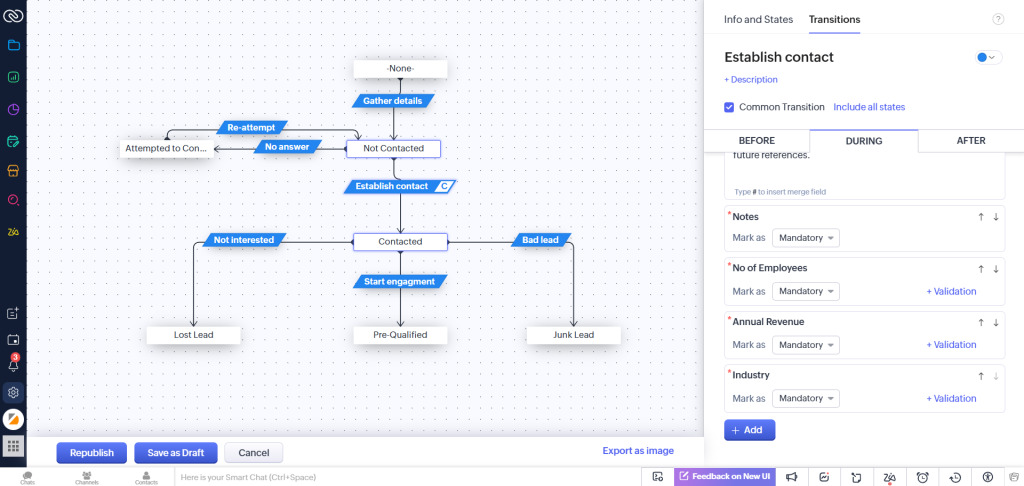
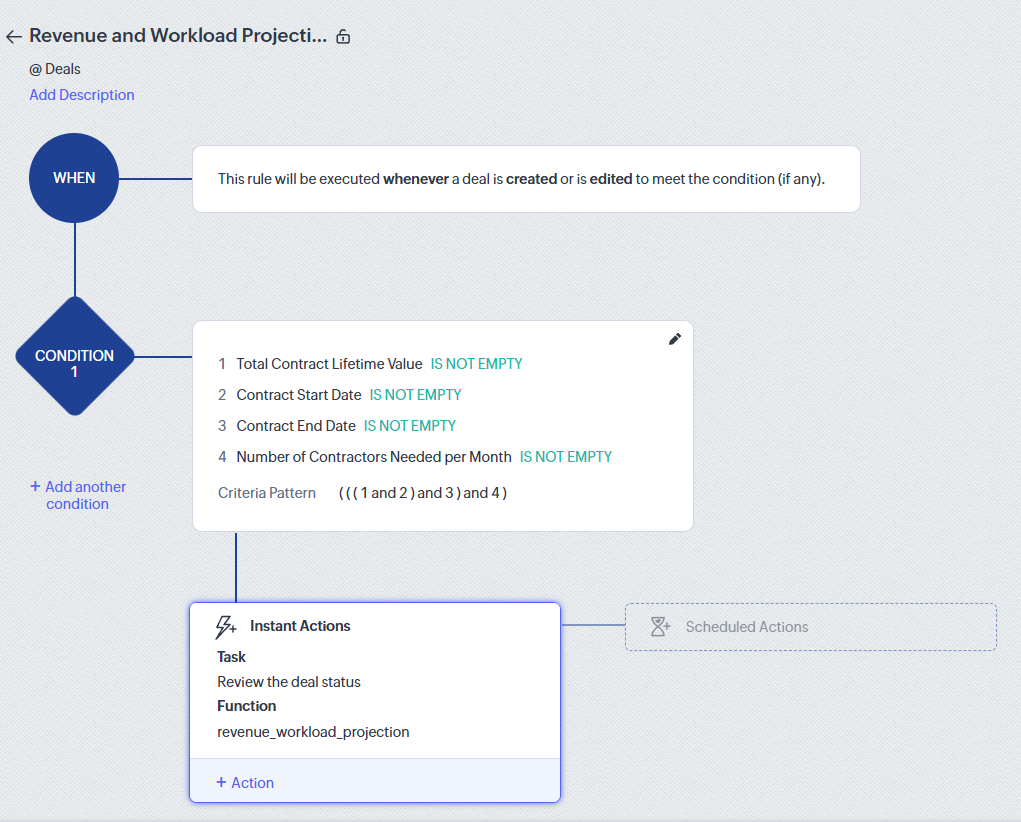
Zoho CRM includes built-in automation tools that remove much of this manual effort. For example, the system can automatically create follow-up tasks, notify salespeople when a deal has been inactive for too long, or trigger emails when a deal moves to a new stage.
For SMEs with small teams, these automations are critical. They reduce reliance on individual habits and help create a more predictable and scalable sales operation.
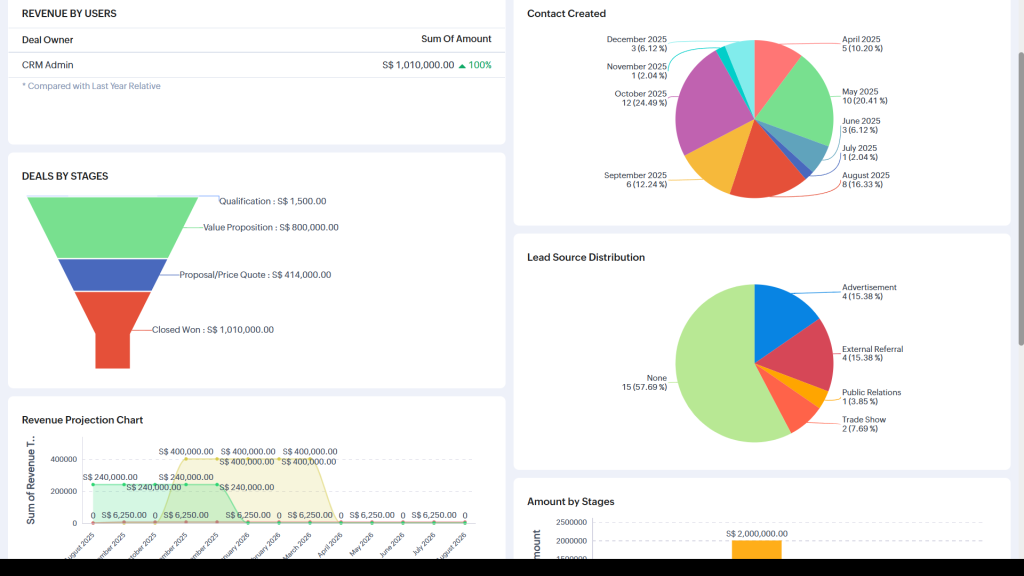
4. Gain Real-Time Visibility with Dashboards and Reports
Without accurate data, sales management becomes reactive. Business owners rely on gut feel instead of facts, and issues are discovered too late.
Zoho CRM provides real-time dashboards that present key sales metrics in a clear, visual format. This includes pipeline value, conversion rates, deal ageing, and individual sales performance. Instead of chasing updates, managers can quickly see where attention is needed.
Over time, these insights support better decision-making—whether that means reallocating resources, adjusting targets, or refining the sales process.
5. Configure Zoho CRM for SME Needs
One reason Zoho CRM is popular among SMEs is its flexibility. Beyond standard sales tracking, it can be configured to support approval workflows, audit trails, and integrations with accounting or marketing systems.
However, flexibility can be a double-edged sword. Without proper design, SMEs often end up with overly complex setups that sales teams resist using. Adoption suffers, and the CRM fails to deliver ROI.
Successful Zoho CRM implementations balance structure with simplicity. The system should guide users, not burden them.

Why Engage a Zoho Partner
While Zoho CRM can be self-configured, most SMEs achieve better outcomes when working with an experienced Zoho partner. An experienced Zoho consultant understands common sales challenges faced by SMEs and can translate them into practical CRM designs.
At Zolution, we focus on aligning Zoho CRM with real sales workflows, setting up meaningful automation, and ensuring users are properly trained. Our goal is not just system deployment, but measurable sales improvement.
Ready to Improve Your Sales Process with Zoho CRM?
If you are exploring Zoho CRM or feel that your current setup is not delivering the expected results, a short consultation can provide clarity. We help SMEs assess their sales process, identify gaps, and define a practical CRM roadmap.
Frequently Asked Questions (FAQ) About Zoho CRM
Is Zoho CRM suitable for SMEs?
Yes. Zoho CRM is particularly well-suited for SMEs because it offers enterprise-grade capabilities at a scalable cost. It supports small sales teams just as effectively as growing organisations, without forcing businesses into rigid or overly complex processes. With proper configuration, Zoho CRM can align with local operating practices, reporting expectations, and compliance requirements.
Do we need a Zoho partner to implement Zoho CRM?
While Zoho CRM can be set up internally, many SMEs struggle to achieve adoption and ROI without external guidance. A Zoho partner helps translate real-world sales workflows into CRM design, avoids over-customisation, and ensures automation is implemented correctly. This significantly reduces rework and accelerates time-to-value.
How long does it take to implement Zoho CRM for sales?
For most SMEs, an initial Zoho CRM sales implementation can be completed within a few weeks, depending on scope. This typically includes pipeline design, basic automation, reporting, and user onboarding. More advanced integrations or custom workflows can be phased in later as the business grows.
Can Zoho CRM integrate with other systems we already use?
Yes. Zoho CRM integrates with a wide range of tools commonly used by SMEs, including accounting systems, marketing platforms, and internal databases. Integrations can be achieved through native Zoho integrations, APIs, or middleware depending on complexity and volume requirements.